The Way Forward
Expansion of Outreaches
Referral and Local Followup Scheme
Infrastructure
Training and Up-skilling Local Clinicians
Building a more established referral Network
Our Vision
Our mass outreach approach allows us to access the maximum number of vulnerable individuals with our limited resources. We do understand, however, that this is a snapshot in time and that healthcare is a longitudinal journey. By consistently returning to communities we aim to empower individuals to engage with their health by providing diagnoses, advice and the tools with which to improve their health in the long term. This allows isolated and vulnerable communities a greater opportunity to engage with healthcare and gain agency over their life and health journey.
Where needed, Mission Mannya supports continued care by assisting with transport, connecting patients with local leaders and community groups, and collaborating with other charitable organisations. We also provide an urgent referral pathway to ensure certain cases can access immediate higher-level care and appropriate follow-up. All associated costs are funded directly through our program.
Our vision for sustainable change is clear: to deliver effective, locally guided healthcare where it is needed most. We have developed a clear pathway for how this can be achieved as we expand into the future.
The Future of Mission Mannya
-
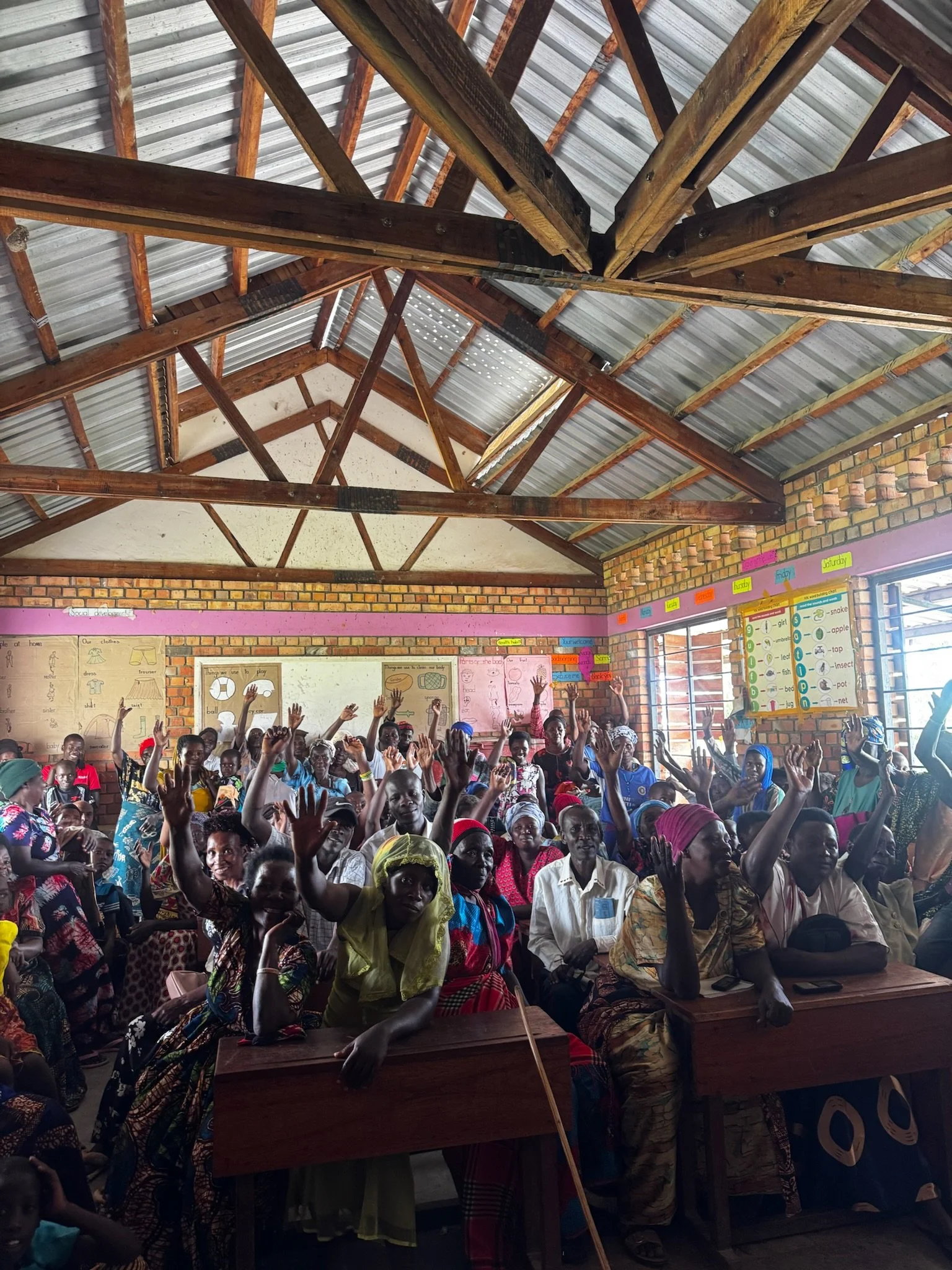
Mass outreach camps are at the heart of Mission Mannya’s efforts, providing free, face-to-face consultations for people who cannot afford to travel. These camps offer a safe, stigma-free environment and essential services including dental care, nutritional support, counselling and education.
Mission Mannya’s 2024 program consulted on 3,231 individuals at 8 mass outreach camps and facilitated the safe surgical treatment of a further 30 patients. This was achieved for a total cost of UGX 107,491,200/= shillings ($46,587 AUD).Despite the scale of our on-the-ground operation, there is still significant room for growth. Whilst we manage to see many patients at our camps, a considerable number are turned away due to time and resource constraints. Additionally, some communities within the region remain largely inaccessible. Expanding our reach to include these more remote communities will require further investment in training and empowering of local personnel—a key focus as we move forward.
-
In our 2024 program, Mission Mannya allocated funds for an Urgent Referral Pathway, to assist in the urgent transfer and support of patients requiring higher level care. Typically these are young patients with serious, advanced, or life threatening illnesses, where immediate intervention could prevent significant disability or death.
In 2024, 22 patients were identified and assisted to receive urgent or emergent follow-up care. Of these, 22% were 14 years or younger, including several orphaned children who had no other means of accessing care. These cases were addressed for an additional UGX 1,715,000/= shillings ($743.30 AUD) which is inclusive of several urgent surgeries at higher centres. -
To support patients requiring specialist or generalist care who cannot travel for treatment, we plan to conduct several smaller follow-up clinics throughout the year within the communities already served by our mass outreach camps. Each clinic will consist of a Ugandan doctor or medical officer, a nurse assistant to manage the clinic, an administrative staff member and a rotating specialist tailored to the community’s specific needs.
The selection of specialists will be informed by data gathered during our mass outreach programs, ensuring that services are responsive to community demand. Additionally, exposure to various medical specialties will offer valuable hands-on experience and continuing education opportunities for local practitioners.
In addition to receiving specialist care, these clinics would provide an opportunity for patients seen at our mass outreach camps to continue to engage in their healthcare. Patients commenced on antihypertensive or diabetic medications for example, will be able to have their doses adjusted as necessary. Patients who have not recovered sufficiently can be reassessed for further investigations or referral.
These follow up clinics, which will be subsidised by our program, will ask a small fee of patients to attend. This shared cost model has proven successful in other regions of Uganda. Clinics remain effective and relevant, without being priced beyond the means of the community.
A shared costs model also paves the way for Mission Mannya to adjust the support given to these programs over time. Specialists have been known to accept much reduced fees at similar camps due to volume of cases and community relationships built.
This is a sustainable plan that will strengthen relationships between specialists and referral centres within our communities, with potential for these pathways to be less reliant on and eventually continue without Mission Mannya support.
Allowing for transport costs, costs of consumables, honoraria for staff and specialists we are budgeting UGX 1,384,369/= shillings ($600 AUD) per follow up camp. We plan to operate camps at 6 sites and aim to visit quarterly (i.e. 3x per year in addition to the mass outreach camp). Thus, to plan for an initial two-year implementation we are looking to assign UGX 49,837,303/= shillings ($21,600 AUD) to this program.
Although we have developed these plans, Mission Mannya currently lacks the resources to implement this branch of our program. We believe this approach offers the most promising path to achieving lasting, meaningful impact.
-
Beyond dedicated Mission Mannya operations, we are exploring additional ways to enhance healthcare access throughout our target region. We have identified several strategies to expand the scope of healthcare services available locally.
One key initiative involves providing essential equipment to improve patient safety and emergency preparedness year-round at St Bernard’s Mannya Health Centre III—the largest health facility in the region and the site where Mission Mannya has supported surgical procedures during our programs. This equipment includes:
● Operating theatre light: UGX 4,614,565/= ($2,000 AUD)
● Blood bank fridge: UGX 20,765,543/= ($9,000 AUD)
● Monopolar diathermy unit: UGX 9,229,130/= ($4,000 AUD)
● Operating theatre fridge: UGX 6,460,391/= ($2,800 AUD)
● Anaesthetic machine: UGX 90,000,000/= ($39,000 AUD)
To improve neonatal safety and prevent morbidity associated with bilirubin encephalopathy we are seeking:
● Neonatal warmer, infusion meter, and phototherapy unit: UGX 10,382,771/= ($4,500 AUD)
Longer term, the installation of an X-ray machine at St Bernard’s Mannya Health Centre III, will be invaluable in diagnosing serious diseases such as tuberculosis, pneumonia, lung cancer and more.
● X-Ray machine: UGX 156,895,214=/ ($68,000 AUD)
-
We envisage that the clearest way to improve access to higher level but locally nuanced healthcare in the region is by upskilling local staff. Whilst our Mission Mannya camps provide the opportunity for collaboration between Australian and Ugandan clinicians, we also see the potential benefits of formal qualifications. In particular, we are exploring the feasibility of supporting dedicated local staff to undertake higher qualifications at local institutions in the form of:
● Advanced Diploma in Anaesthesia: UGX 16,492 =/ ($7422AUD)
A two-year course at the nearby Kitovu Health Training School that would increase the scope of practise of a nurse to be able to facilitate simple procedures as a nurse anaesthetist.
The lack of access to a local anaesthetist is the most pressing staffing shortage at St Bernard’s Mannya Health Centre III.
By committing to the professional development of local healthcare staff, Mission Mannya is looking to lay the foundations of an improved level of care within the region. Additionally, this initiative will help build a connected community of healthcare professionals within the region, fostering an environment of ongoing growth within the health system.